 Re'Mi music
2 min read
How long does a room keep a sound? A fresh look at reverb
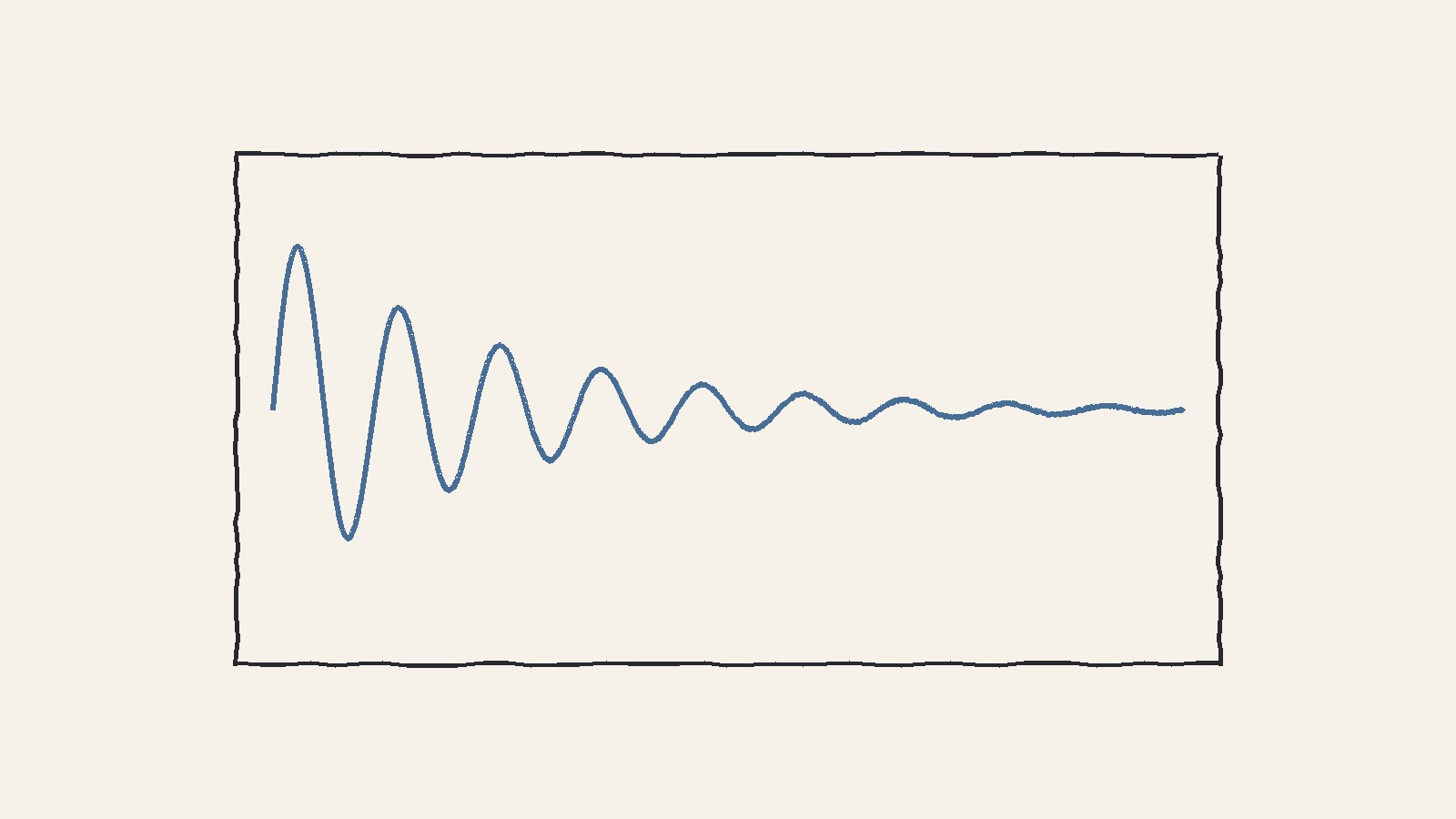
Clap your hands in a bathroom, then clap them in a bedroom. You already know the difference. The bathroom rings on, the bedroom swallows the sound. That "ringing on" is reverberation, and people who design rooms and mix sound try to predict it before anything gets built.
For about a century, two formulas have done most of that work, the Sabine and Eyring formulas. Both predict how long a room's sound takes to fade, using the room's volume, its surface area, and how absorbent the walls are. But they don't always agree, and they get less trustworthy as the walls get more absorbent.
This month, Toshiki Hanyu of Nihon University Junior College in Japan posted a new paper on the preprint site arXiv. It looks at the problem a bit differently. His key idea is the average distance a sound travels before it hits its next wall. One thing that falls out of it: even if the walls absorbed everything, the sound wouldn't disappear the instant the source stopped, because sound already travelling through the room keeps going until it reaches a wall. I like that. It's obvious once someone says it.
Then comes the practical part. He tested his simple formulas with computer simulations of three differently shaped rooms. In those tests, Sabine's formula was off by up to about 24% and Eyring's by up to about 16%, while the new formulas stayed within roughly 5%. And they only need the same three numbers: volume, surface area and absorption.
A few honest caveats. These are simulations of rectangular rooms, not measurements of real ones, and it's a preprint, so other experts haven't checked it yet. Still, as someone who cares how rooms sound, I enjoy seeing an old idea get a careful second look.
I'd love to know: what's the best-sounding room you've ever clapped in?
Takeaway: A room's echo doesn't switch off the moment the walls absorb sound, and a simple new formula may predict it better than the old ones.
Source: Toshiki Hanyu, "Statistical foundations of revised reverberation theory for a diffuse sound field in a room," arXiv:2610.21826 (15 October 2026), https://arxiv.org/abs/2610.21826