 Re'Mi Music
2 min read
Listening for the quiet
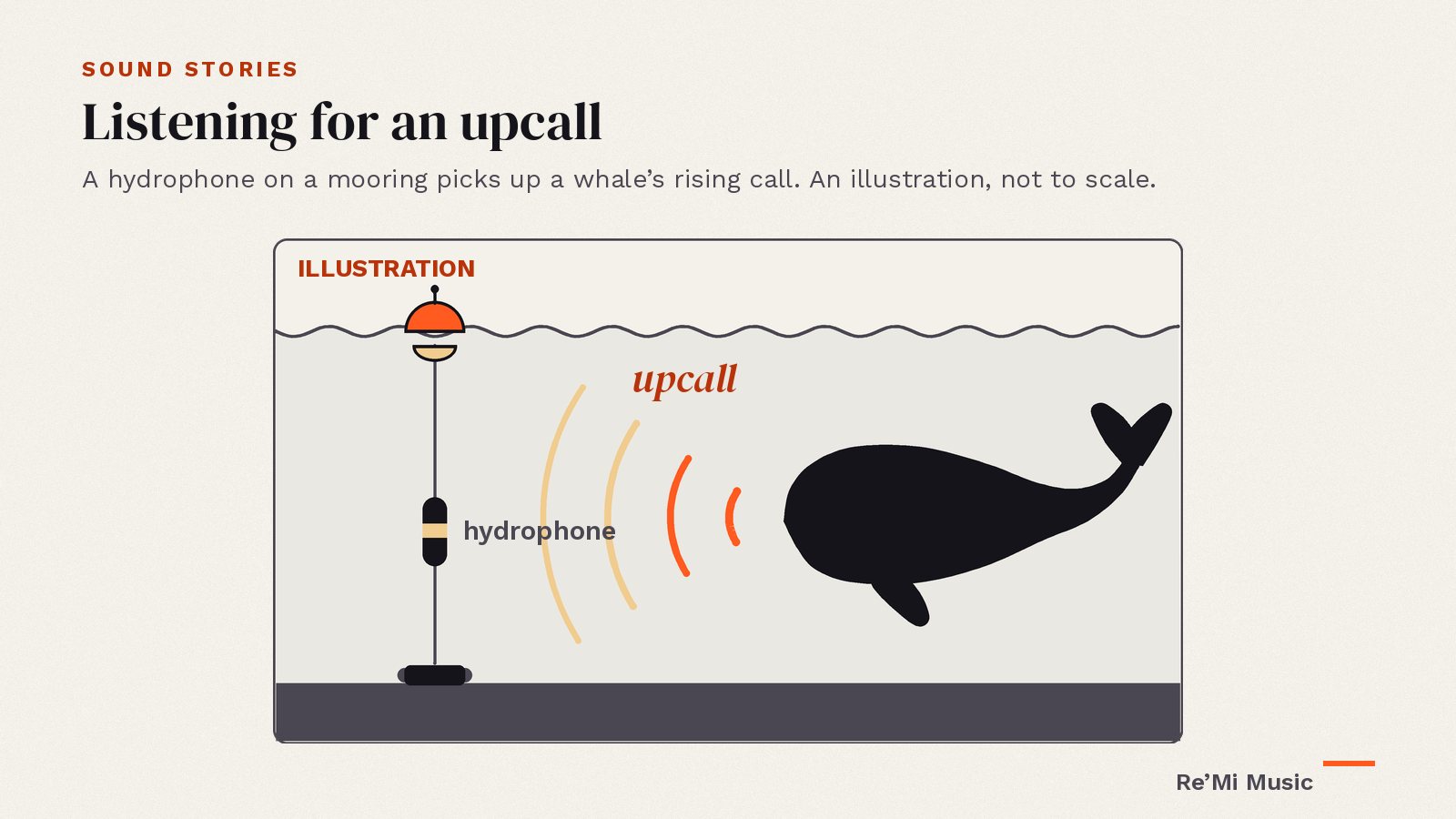
I'm a sound engineer, so I'm always curious about what a microphone can catch. This week I found a study where the microphones were underwater, and what they didn't catch turned out to matter just as much.
How they listened
Scientists put hydrophones (underwater microphones) on seven moorings across the eastern Bering Sea shelf. They recorded from 2012 to 2019. The team cut the recordings into 10-minute clips and read them as spectrograms, using NOAA's SoundChecker, looking for two kinds of calls. One is the upcall, a rising sweep that the CICOES write-up describes as "an up-lilting hum from the back of your throat". The other is the gunshot call.
What the cold pool is
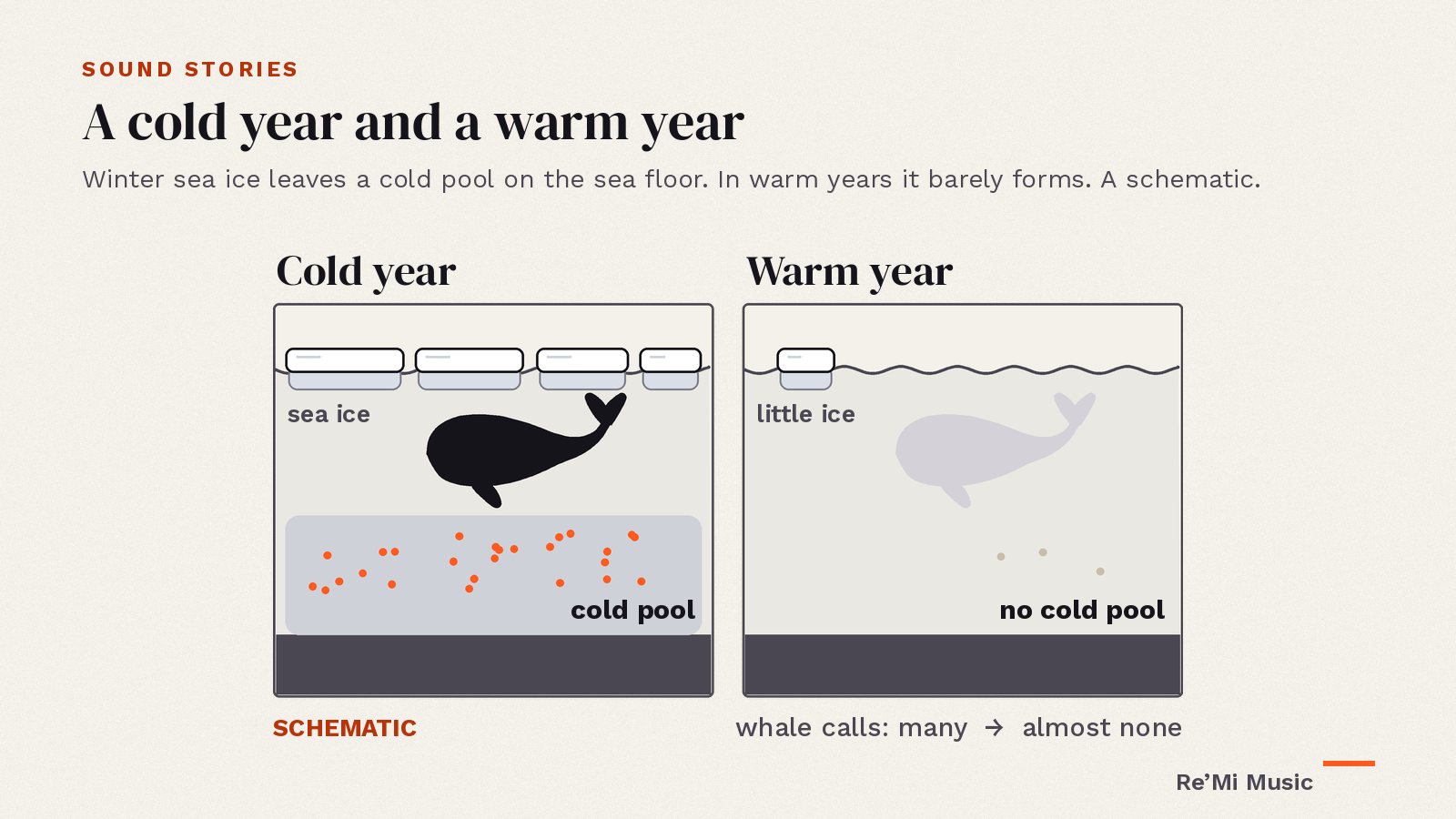
The whales in question are North Pacific right whales. They eat Calanus, a type of zooplankton, and Calanus does well in the cold pool: a layer of near-freezing water that sits on the sea floor. It forms as winter sea ice melts in spring. Warmer years mean less sea ice, and less ice means a smaller cold pool, or none at all.
What they found
In two of those years there was almost no cold pool, and the team heard hardly any calling. They suggest the whales may have spread out further to find food. The work is by a team led by Dana Wright at CICOES, published in the journal Ecological Applications.
An honest limit
Calls aren't a head count. The recordings show when and where whales called, not how many were there. Silence on a recording is a clue, not a number.
A hopeful note
Fewer than 50 whales remain in the eastern population, where there were once likely over 20,000. But a few juveniles have been seen, and that's a good sign.
Takeaway: Sometimes the quiet on a recording says the most about how the ocean is doing.
Sources
- CICOES feature, 27 October 2026: A catalog of whale calls: listening for North Pacific right whales in a changing Bering Sea
- Wright et al., "Habitat use by critically endangered North Pacific right whales linked to sea ice dynamics at varying spatial scales", Ecological Applications 36(7): https://doi.org/10.1002/eap.70329